
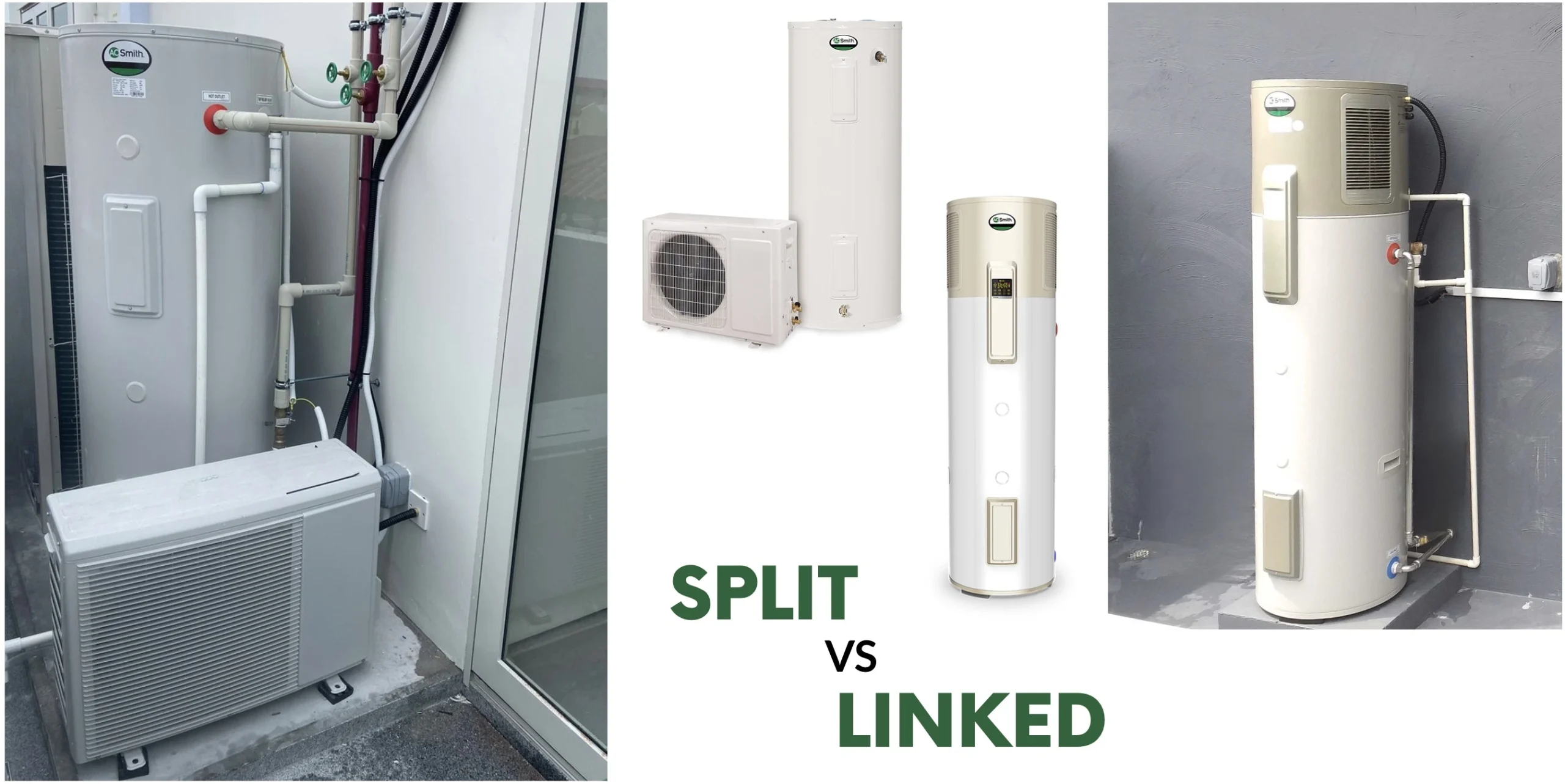
What heat pump should you choose for your landed home? A split or linked (integrated) system? We have listed the difference between both heat pumps here:
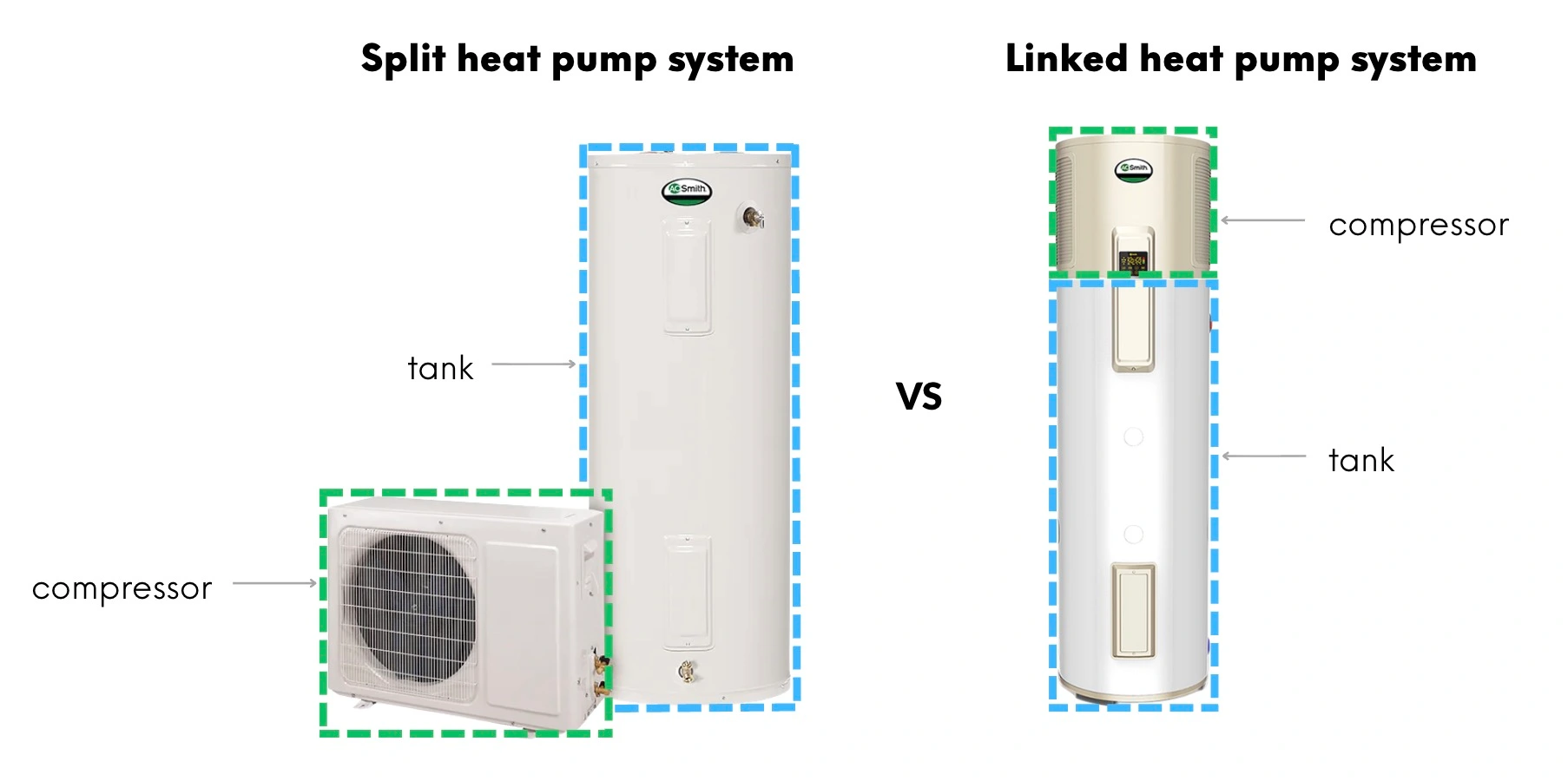
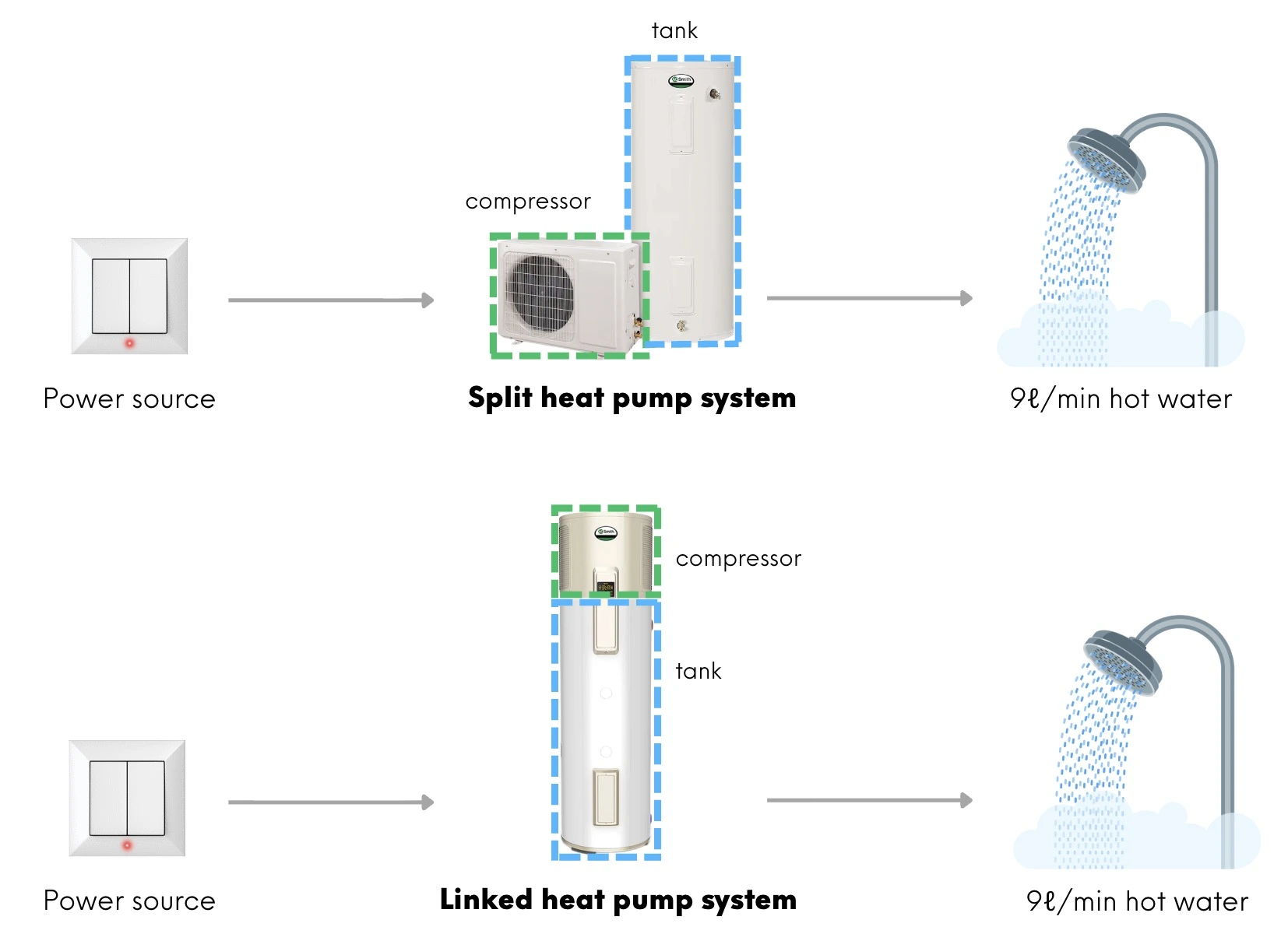
Split heat pump systems are the first versions of heat pumps available. They are built simply, linking a tank and a compressor. The compressor is similar to an aircon, except it works in reverse. So, a heat pump system cost around the same as an aircon, about $5k.
An integrated or linked heat pump system has with advanced technologies that makes the compressor smaller and allows it to stack over the tank. For this space saving technology, we pay more for linked heat pump systems.
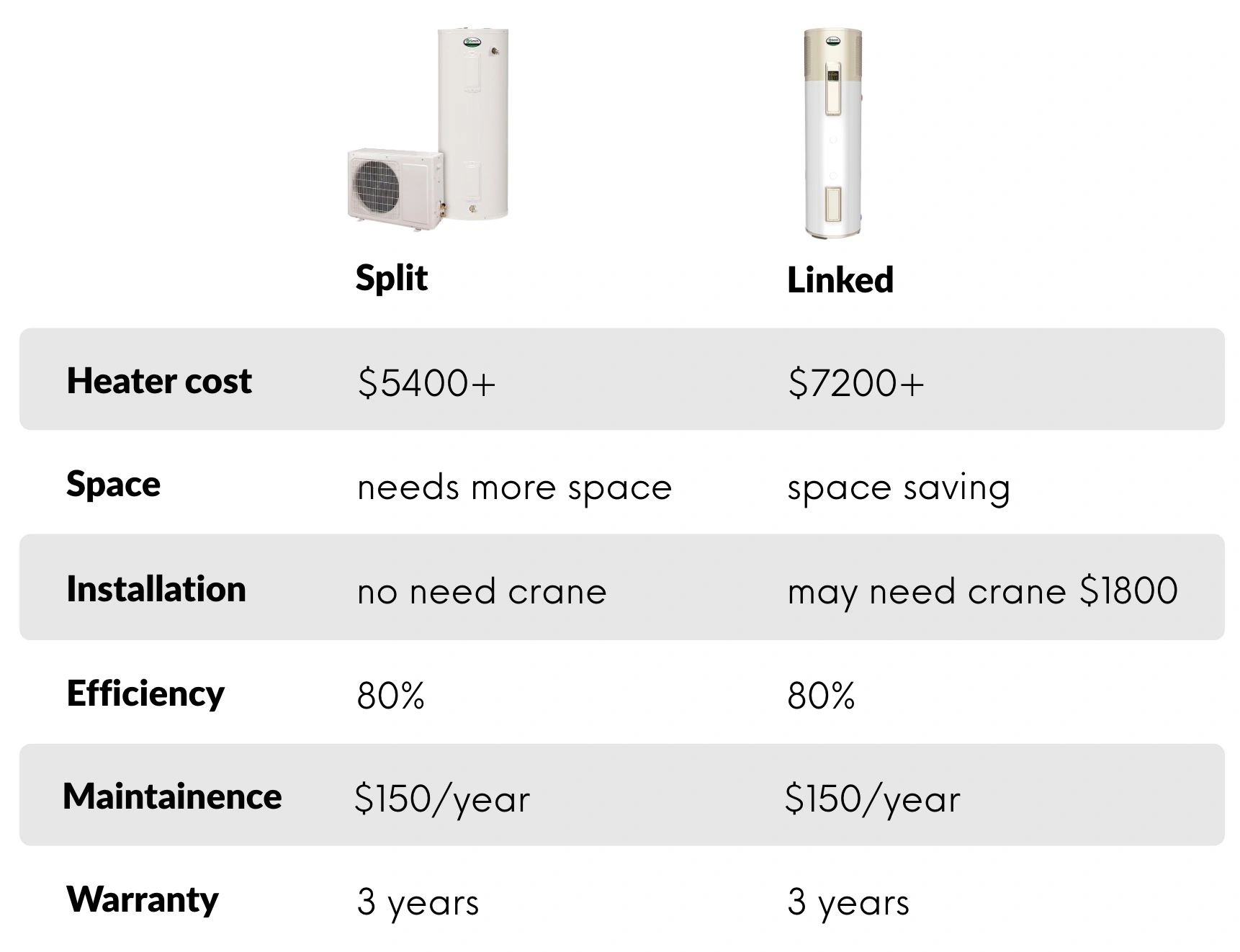
Both split and linked heaters need regular maintenance every 3 years, costing about $150/year.
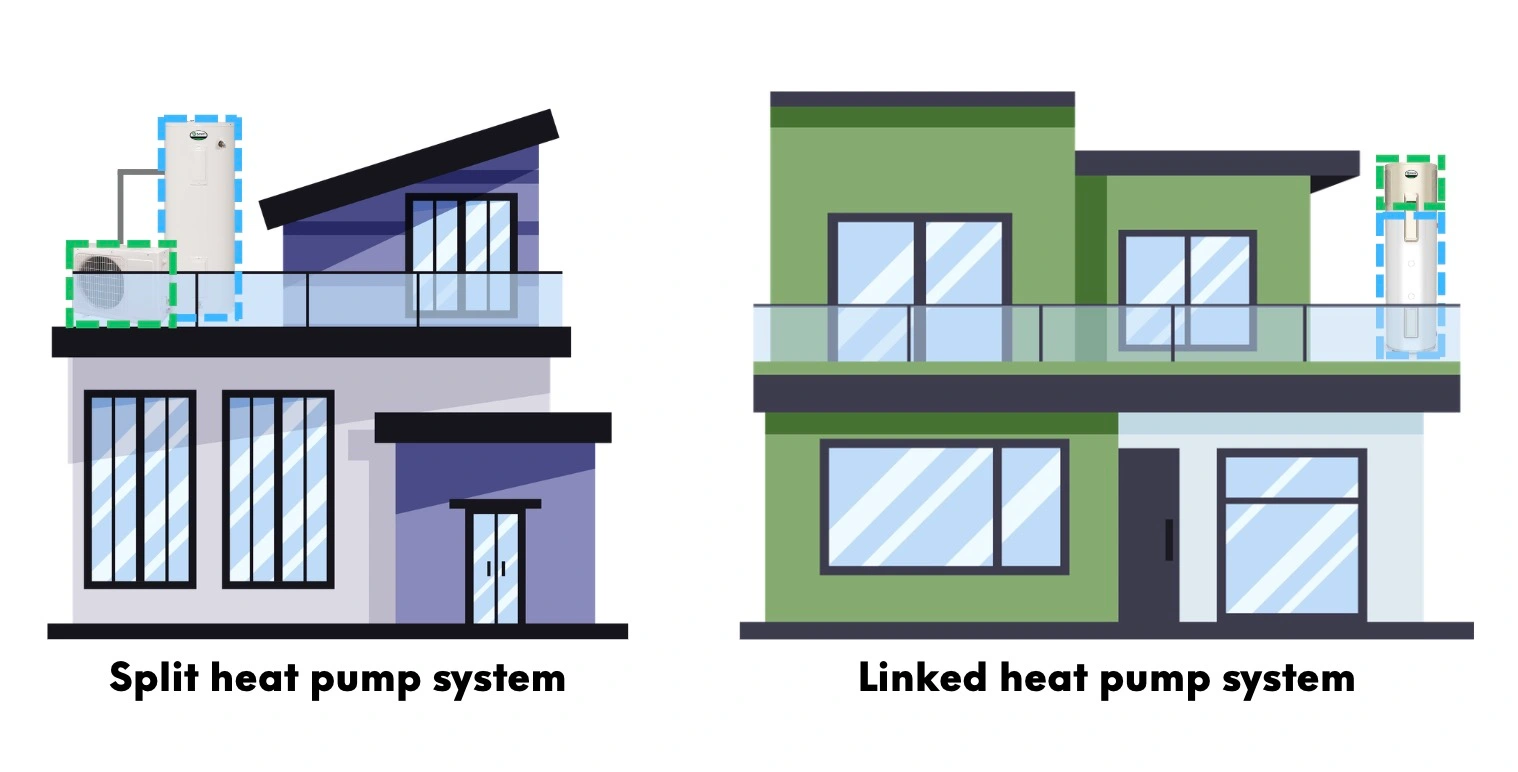
Split heat pumps are easier to install because the tank and compressor are separate. This makes it easier to carry up to your house as the weight is split. To use this, you need space to fit both a compressor and a tank.
In linked systems, the tank and compressor are combined in one unit. But this also makes the linked heater taller and heavier. It may not fit into smaller home lifts, so to lift the heat pump heater to the roof, you may need a crane that costs $1800.
Your layout and space determine what kind of heater to get.
Despite how the split and linked heat pumps look different, the efficiency and performance of both heaters is the same.
Both heaters are equally efficient, giving you 80% savings. Water pressure is great, and they can support both rain showers and bathtubs.

Both types of heaters come with a Blue Diamond™ tank, patented in the 1920s. his special glass coating protects the inside of the tank from corrosion and is designed to expand and contract with the metal as it heats and cools, without cracking or peeling.
Because of this durable lining, our heavy-duty tanks can last up to 10 years, compared to the average lifespan of about 5 years for standard tank water heaters in Singapore.
This is why we can confidently offer Singapore's longest warranty, 3-year full onsite warranty. While most brands provide only a 1-year warranty, our long-lasting tanks give us the confidence to stand behind our products for three times longer.
When comparing the split and linked heat pump systems, the difference is small. They are both equally energy efficient with a long-lasting tank.
The main factor of deciding whether a split or linked system is better for you is the price, and how much space there is in your home.