Why does one bathroom in a brand new landed home give you a steady supply of hot water, while another stubbornly stays cold? If you have a central heater, it is worth taking a closer look at those pipes.
This pipe mistake is the one we get asked about more often than any other. It is also the hardest to fix, because by the time you find it, the walls are closed and the tiles are up.
The solution? Re-run the pipes. And we know this can cost tens of thousands of dollars. This article covers what your consultant and plumber need to know when they are doing the drawings.
When do you need a circulation loop?
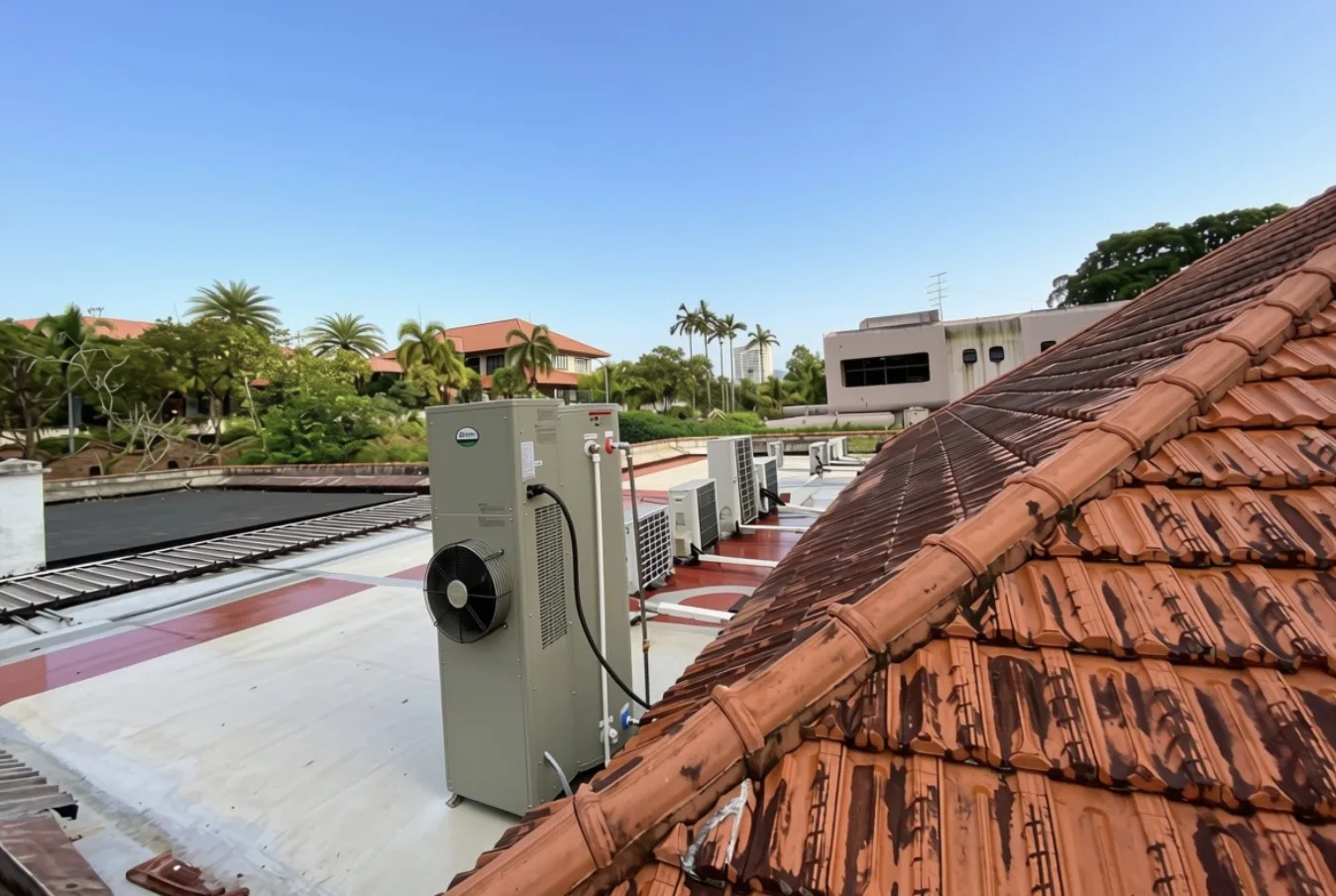
You need a loop when using a central heater. A central heater is a huge tank that can be 100 to over 400 litres. This tank supplies the entire household. It is fixed far away from all bathrooms, in areas like the roof top. Because of its distance, the time taken for you to get hot water can be long, up to 10 minutes.
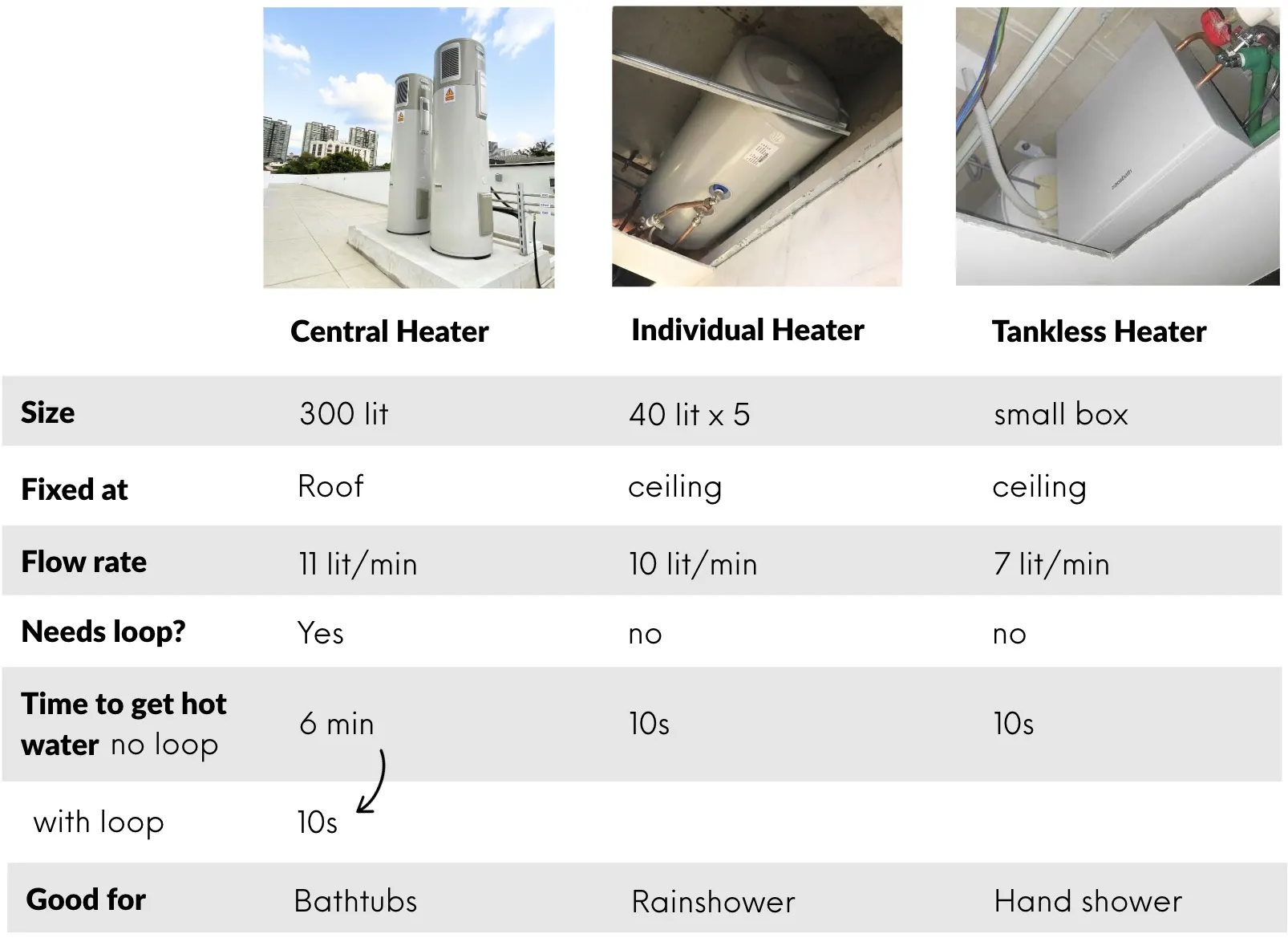
Individual heaters are smaller and installed above false ceilings. Because these heaters are located close to the shower point, hot water gets to you fast and you don't need to run a loop.
There is no 'better' system here. It all depends on the size of your home and what you want.
What does the recirculation loop look like?
A recirculation (or circulation) loop is a pipe (red) that runs from the heater, around the house and back to the heater again, in one continuous circuit. A circulating pump (green) pushes water through that loop non-stop, so hot water is always moving somewhere in the house instead of sitting still in the heater.
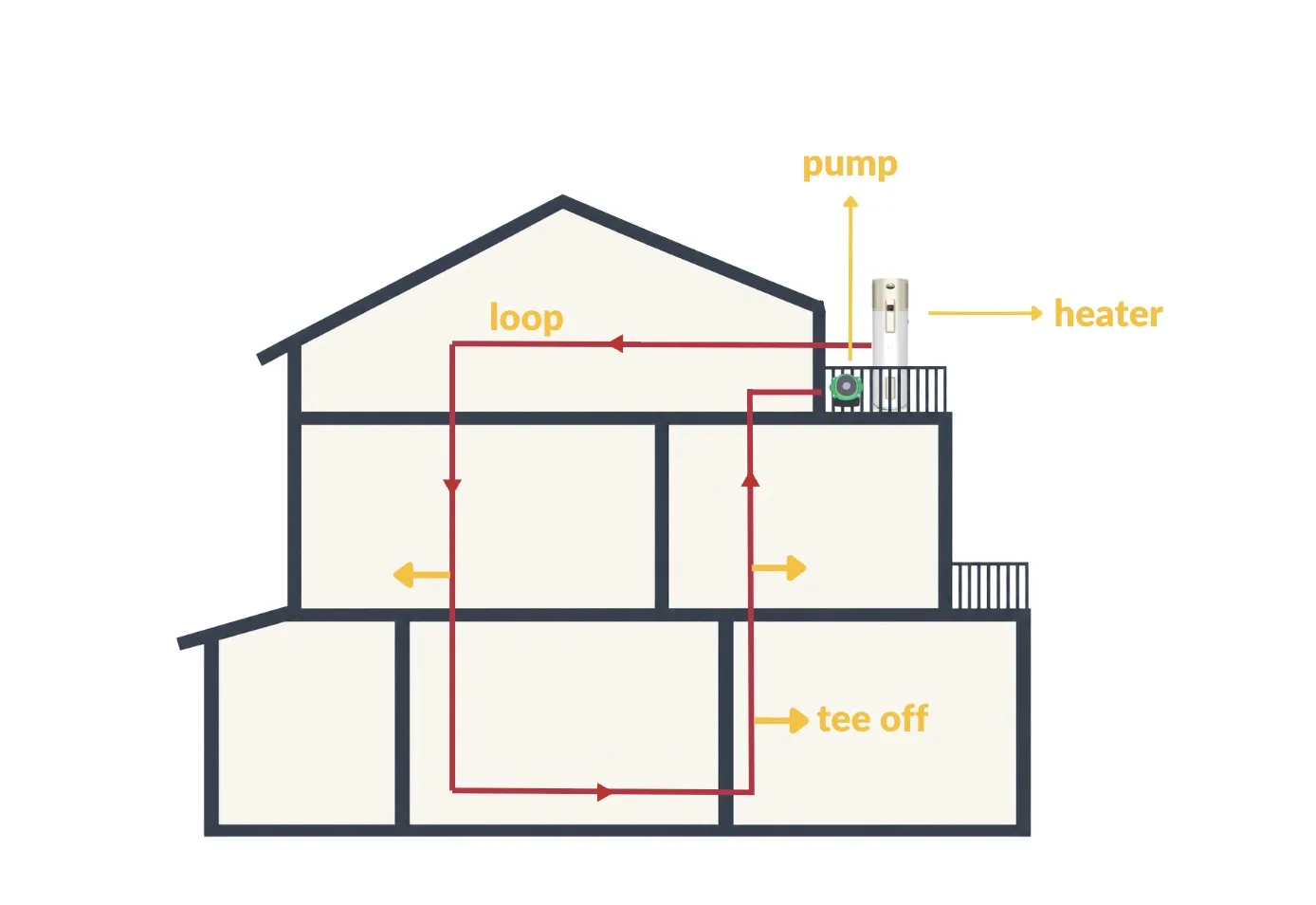
Every bathroom taps into this loop through a small branch pipe called a tee-off (yellow).
With a tee-off, hot water reaches a bathroom in seconds. Without one, hot water can take 5 to 10 minutes to reach a distant bathroom in a large landed home. This is the benefit of a loop.
#1 rule: The loop must be continuous
It only works if the water flows in one unbroken circle. Out of the heater ➜ around the loop ➜ into the pump ➜ and back into the heater. Every bathroom tees off it along the way.
Sounds simple? It isn't. This is where most pipe work goes wrong.
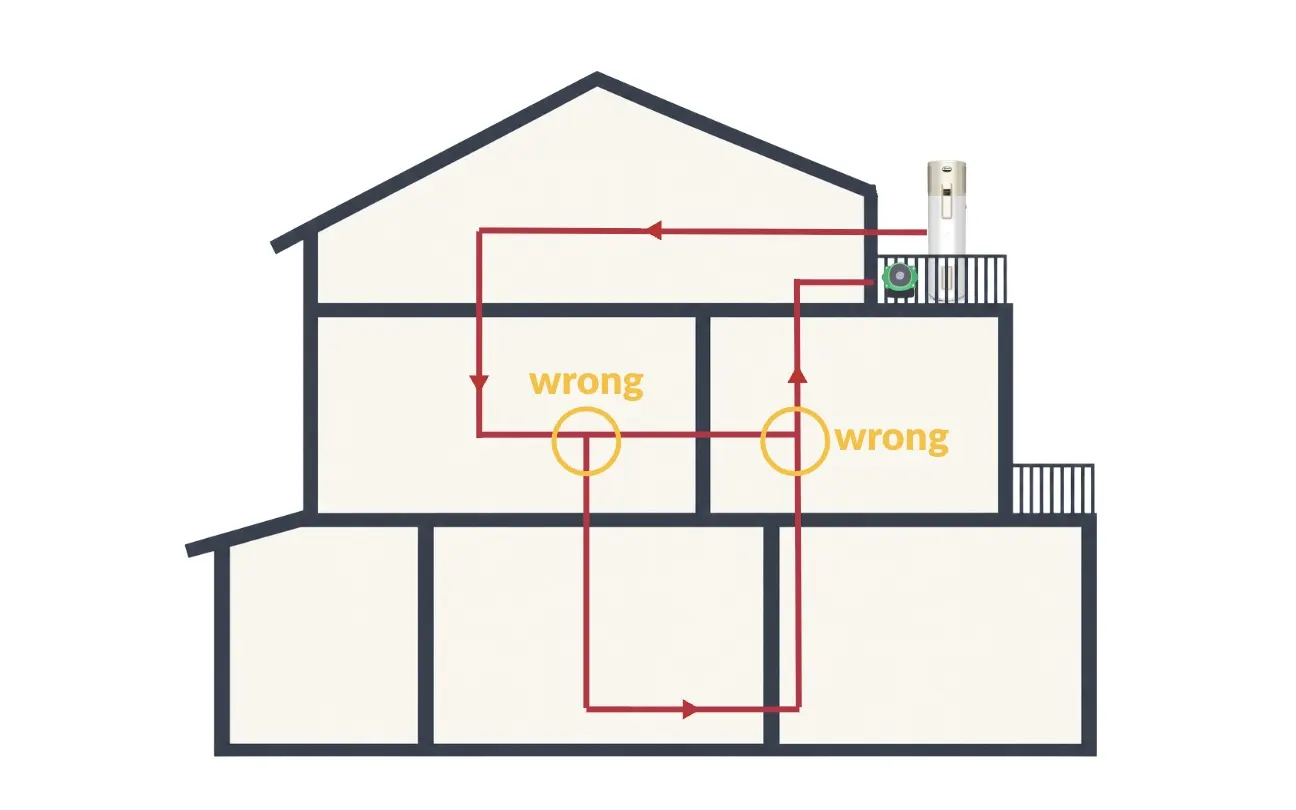
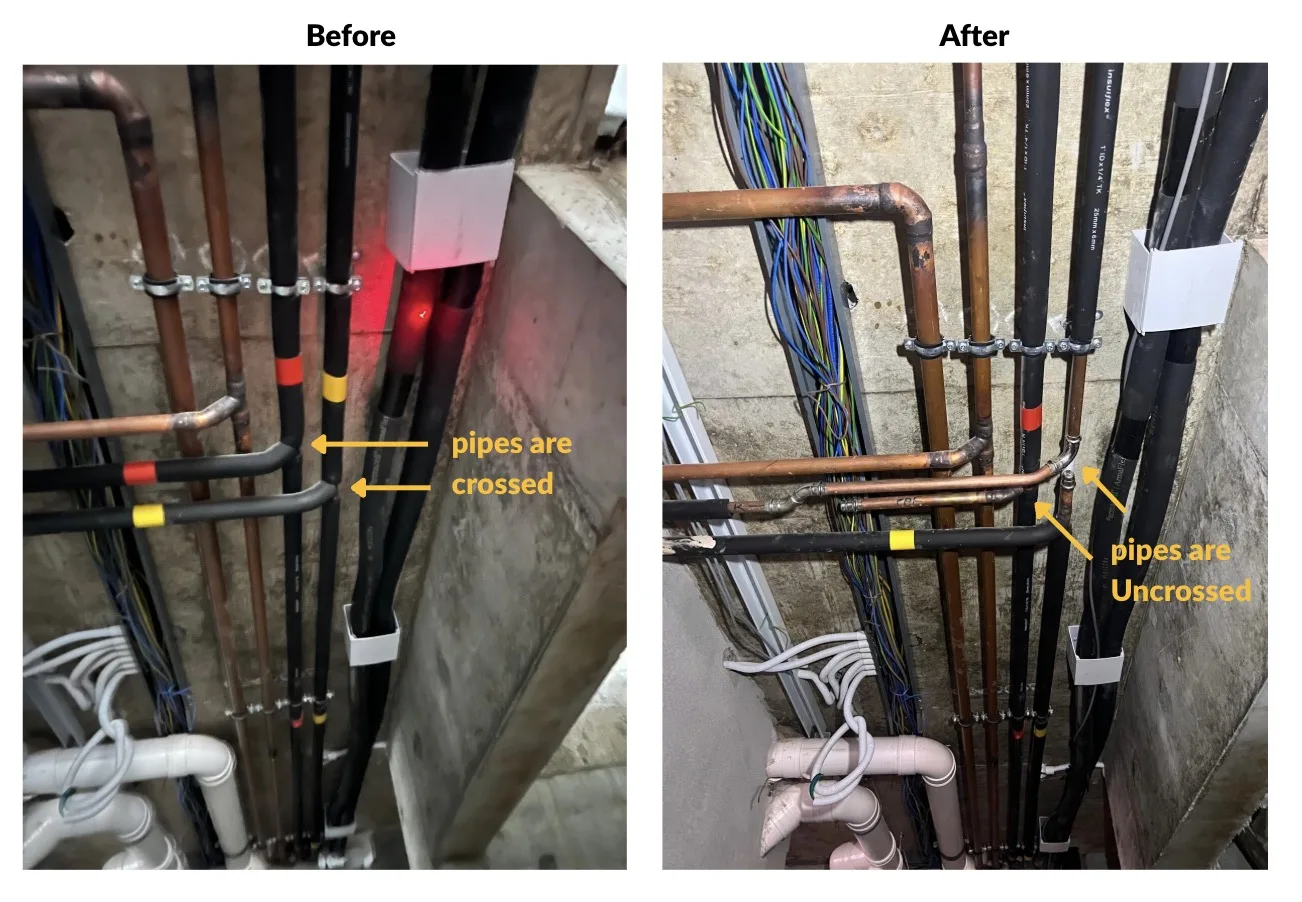
Mistake: Pipes crossed
This mistake happens when two pipes get joined at an X, instead of each pipe going straight through.
Once that happens, the circle is cut off. Hot water now only flows in the circle closer to the heater. The other section becomes a dead zone.
This is what crossed pipes look like, in a diagram and in actual pipes on site. Parts where the pipes cross are marked out in yellow.
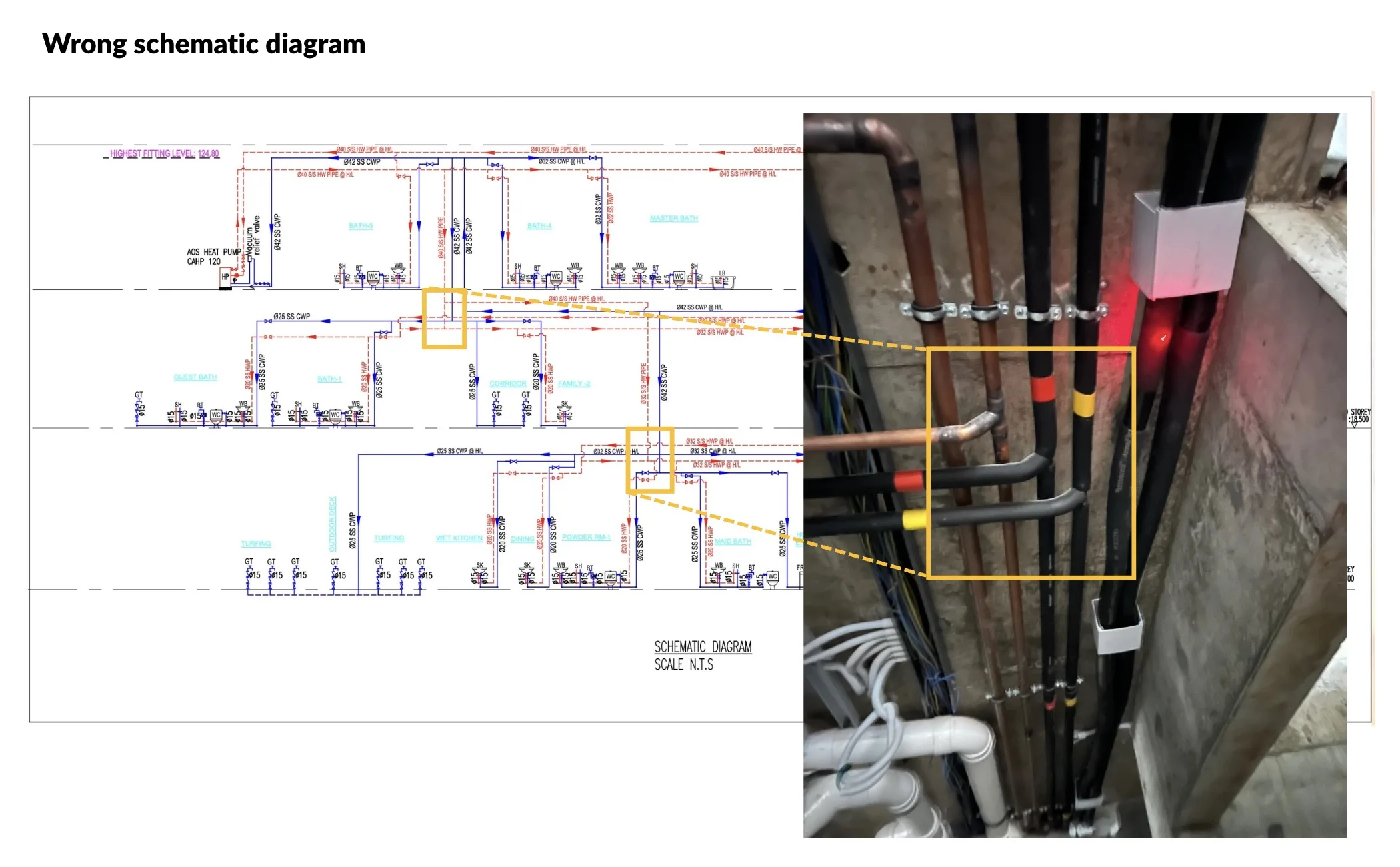
In this real case, Mr. Lee's consultant drew a cross in the pipes, marked out in yellow.
His main contractor was not wrong running the pipes. He was only following the diagram. Luckily, they found out in time before the walls were sealed.
Why this mistake is expensive
By the time you find out, the renovation is over. The pipes are concealed and the walls are closed up or tiled. Hacking the walls to redo the pipe work can cost $20,000 or more.
We have seen this happen with the most experienced construction teams. It is the number one mistake we find in Singapore's landed homes. A reminder is free. Fixing the mistake is not.
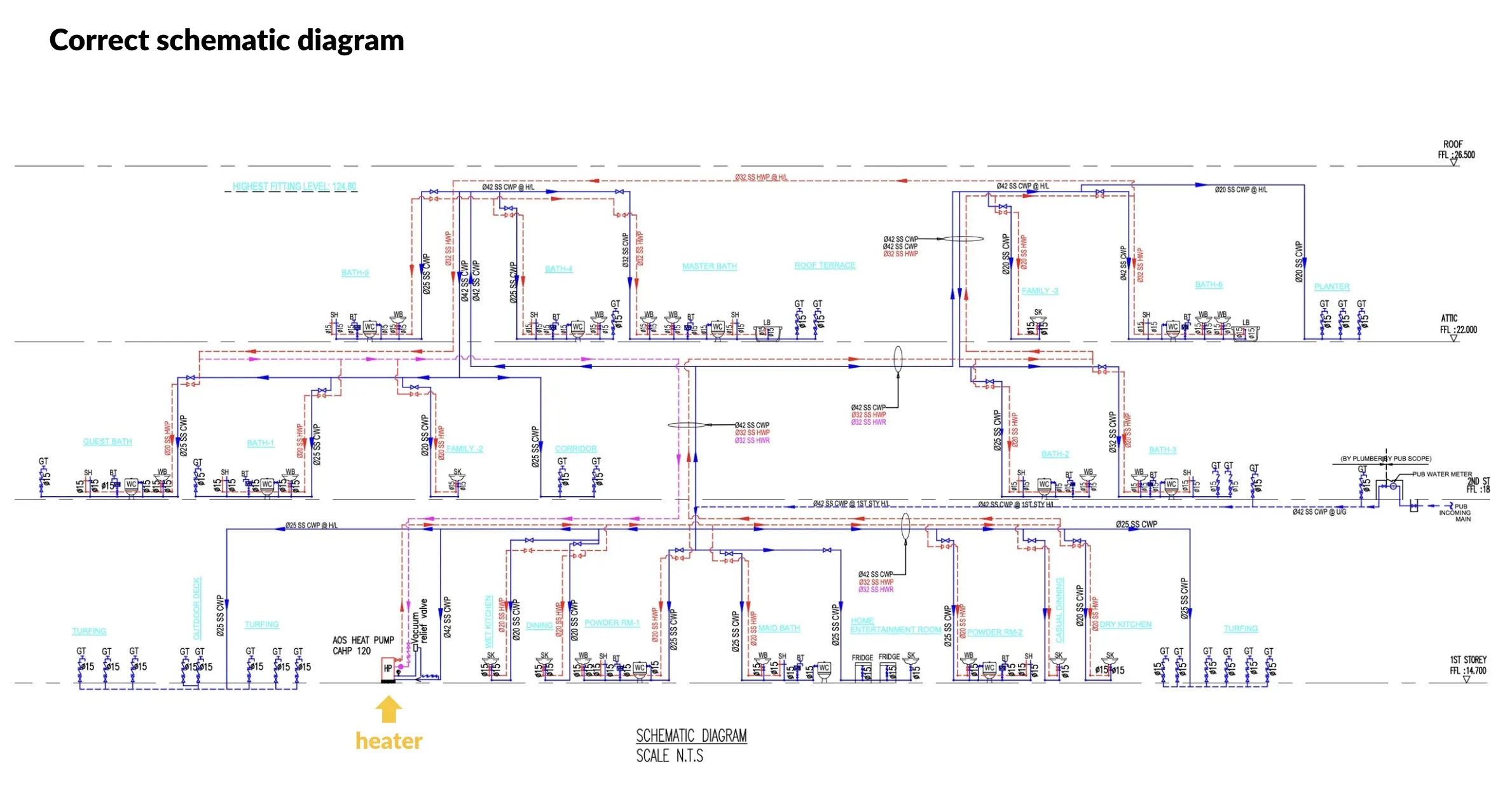
How to get the loop right before drawings are final
Follow the red-pink line in the diagram above. It runs from the heater in one loop with no crossing. Forward this diagram to your consultant so they draw the right layout for your contractor.
Check these with your consultant or plumber:
1. No two pipes join at a cross fitting.
2. The loop runs out from the heater and back in one circuit, with no dead ends.
3. Every bathroom tees off the loop.
How to test the loop
Test before anything is tiled over, in 2 steps.
1. Pick one tap. Hot water should come out within 15 seconds. Hot water means the heater works. Speed means the pump works.
2. Run hot water at every other tap. If one stays cold or takes minutes, pull up the schematic and check for crossed pipes.
When we install a heater, we test one tap. Testing every other tap falls under piping, so check that with your plumber.
Running cost, privacy, who uses a loop?
A central heater needs a circulating loop, and a loop needs more pipe, more fittings, and a pump that keeps running. That pump uses power around the clock, so a loop always costs more to run than the same heater without one.
So why do people use a central heater in the first place?
Maximum privacy: The central heater sits well away from any bathroom. A technician can service it without stepping into someone's ensuite. If you value privacy and personal space, that is a real benefit.
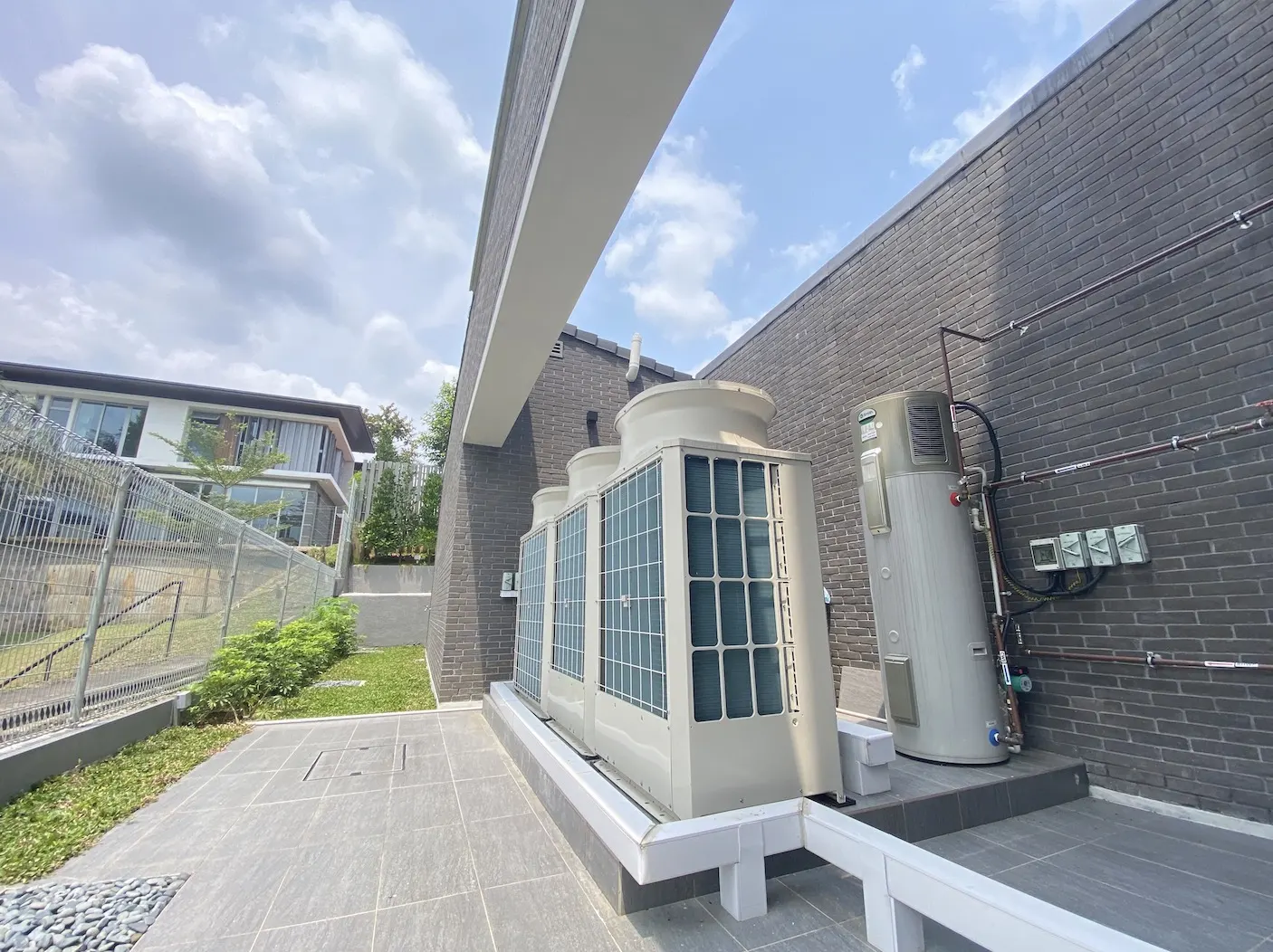
Good Class Bungalow owners tend to choose the loop because privacy matters more to them than running cost. Their homes are also large enough that instant hot water everywhere is worth it regardless of the electricity bill.
Owners of semi-detached and smaller landed homes tend to be more cost-conscious, and often prefer individual or tankless heaters instead. Neither choice is wrong.
How much energy does a loop consume?
We tested this ourselves, in a building housing 25 people, each showering twice a day.
These were the results:
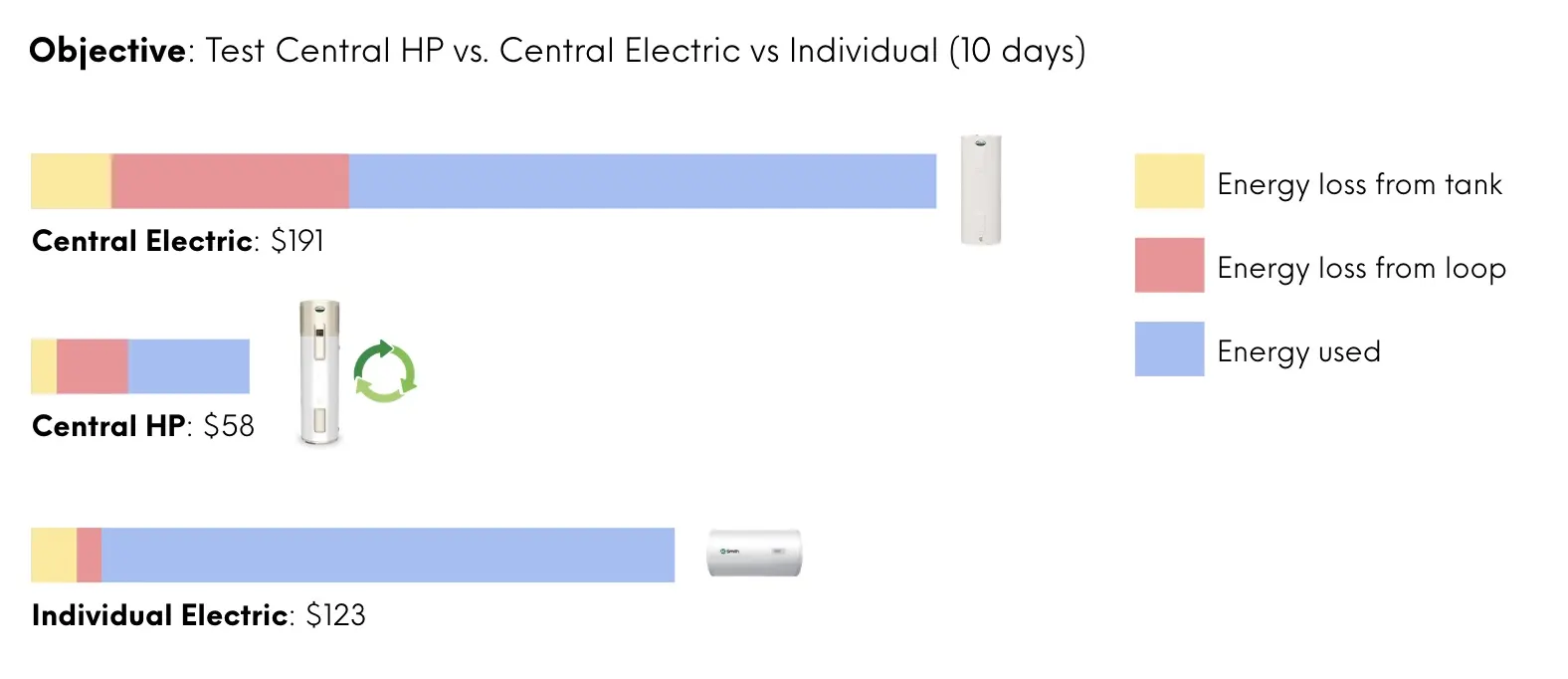
Over 10 days, the cost to run:
• AOS central electric heater with a loop: $191
• AOS central heat pump with a loop: $58
• AOS Gen 1 individual electric heater, no loop: $123
Even with a loop, the central heat pump cost less than an individual electric heater with no loop. If you run a loop, use a heat pump. The heat pump itself is that much more efficient. A loop adds cost, but with a heat pump, your efficiency still comes out ahead.
Heat pumps save more
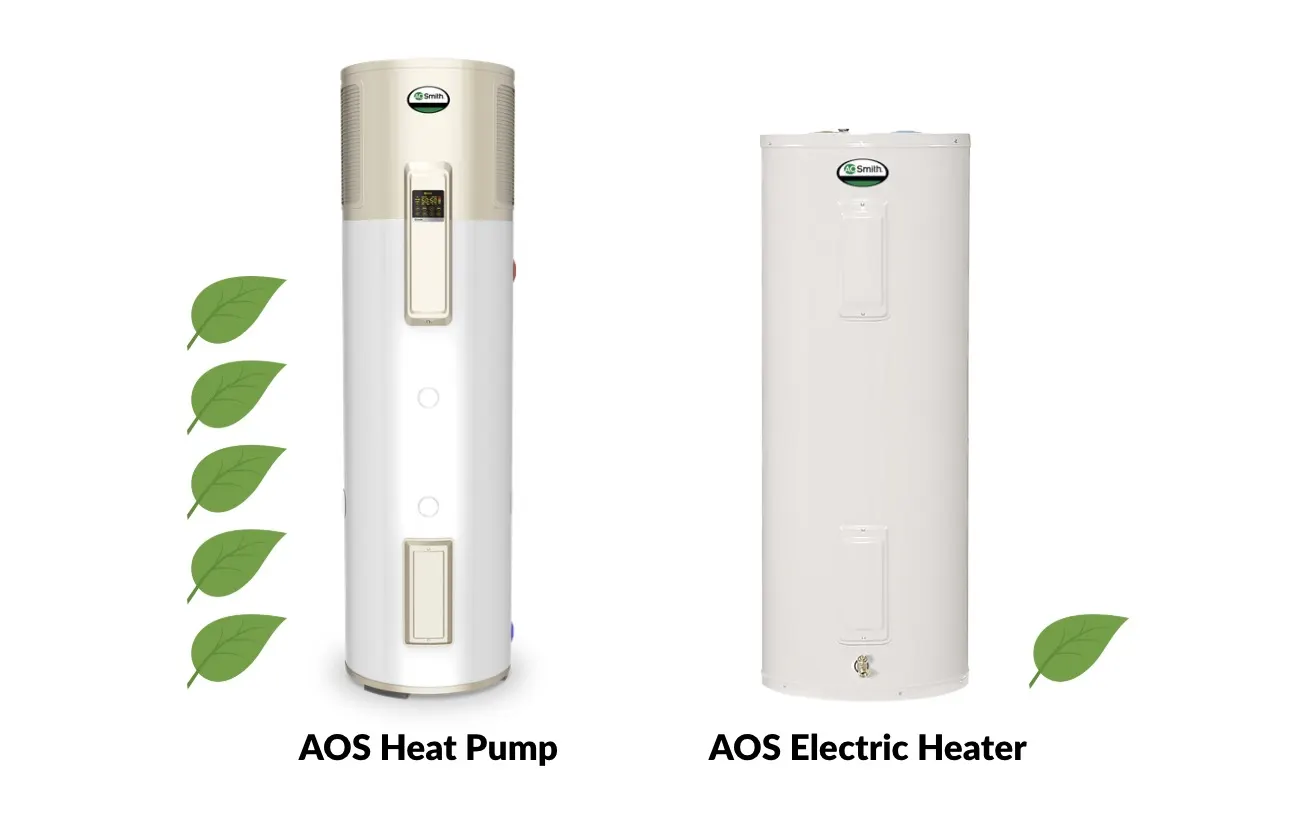
Every water heater sold here carries a tick rating from 1 to 5, under NEA's Mandatory Energy Labelling Scheme (MELS). More ticks means a more efficient heater. Some heat pumps get 5 ticks while electric storage heaters get 1 tick.
Conclusion
Every central heater needs a recirculating loop. The loop only works if it is one continuous circuit with no crossed pipes. If you run a loop, use a heat pump.
Remember to check the diagrams before the drawings are final and do tests in all bathrooms before anything is tiled over.